CLIENT
City of Subiaco
PROJECT
Create Subi
YEAR
2025
project overview
CREATE SUBI IS A CITY OF SUBIACO INITIATIVE DEVELOPED TO HELP REPOSITION SUBIACO AS THE HUB FOR ARTS AND CULTURE THROUGH CEATIVE EVENTS AND COMMINITY PARTICIPATION.
THE PROJECT FOCUSES ON INTRODUCING A CLEAR, OWNABLE CONCEPT THAT STIMULATES ACTIVITY, ENGAGEMENT, AND LONG-TERM ARTS AND CULTURAL MOMENTUM.
THE PROBLEM
Subiaco has a strong cultural history, but in recent times creative activity and public engagement have declined. The City of Subiaco needs fresh thinking that can help re-establish the area as a place for arts, culture, creativity, and participation.
Without a clear and credible initiative, there is a risk that activation efforts will feel fragmented, short-term, or easy to ignore.
THE concept
CREATE SUBI was developed as a place-based initiative designed to invite participation rather than prescribe outcomes.
The concept focuses on creating a framework where the community and local small businesses become the creators, with the initiative acting as a platform for ongoing activity rather than a one-off campaign.
THE approach
The approach prioritises clarity, flexibility, and longevity.
Rather than leading with visuals, the work focuses on defining what CREATE SUBI is, who it’s for, and how it should show up publicly in a way that feels credible, inclusive, and adaptable over time.
CREATE SUBI POSITIONS SUBIACO’S CREATIVE RENEWAL AS AN ONGOING PROCESS RATHER THAN A SINGLE EVENT.
TO CREATE IS TO BRING SOMETHING NEW INTO EXISTENCE, AND MEANINGFUL CREATION OCCURS OVER TIME.
Instead of a one-off activation, CREATE SUBI proposes twelve creative weekends across the year, allowing ideas to be tested, refined, and developed in public space.
With limited available land and significant resources already dedicated to green spaces, the project utilises a low-maintenance, high-value site: the rooftop car park at 277 Barker Road. The location offers shade, accessibility, and security, while remaining flexible for temporary weekend use.
CREATE SUBI provides a structured, adaptable framework for re-imagining Subiaco as a future creative hub.
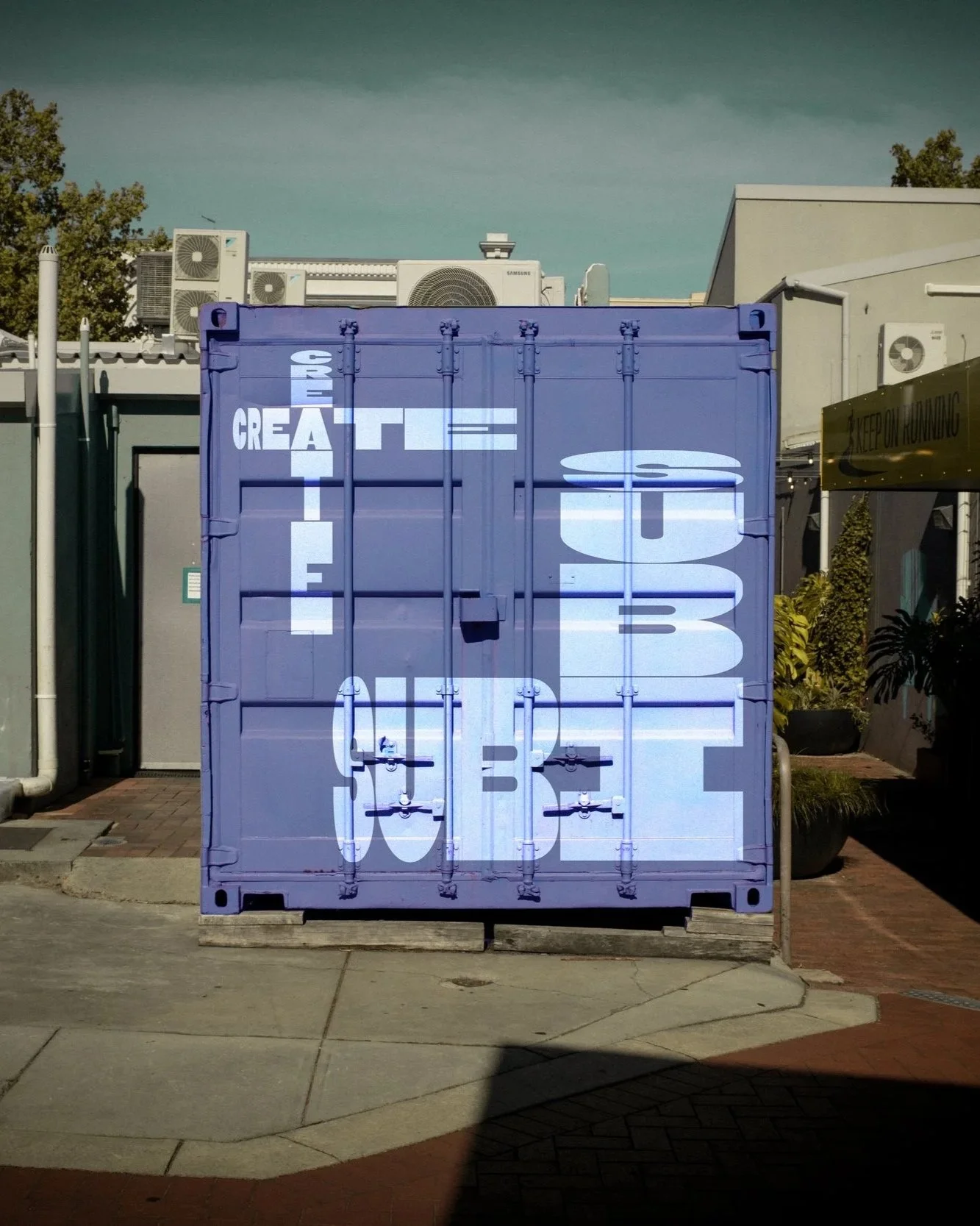
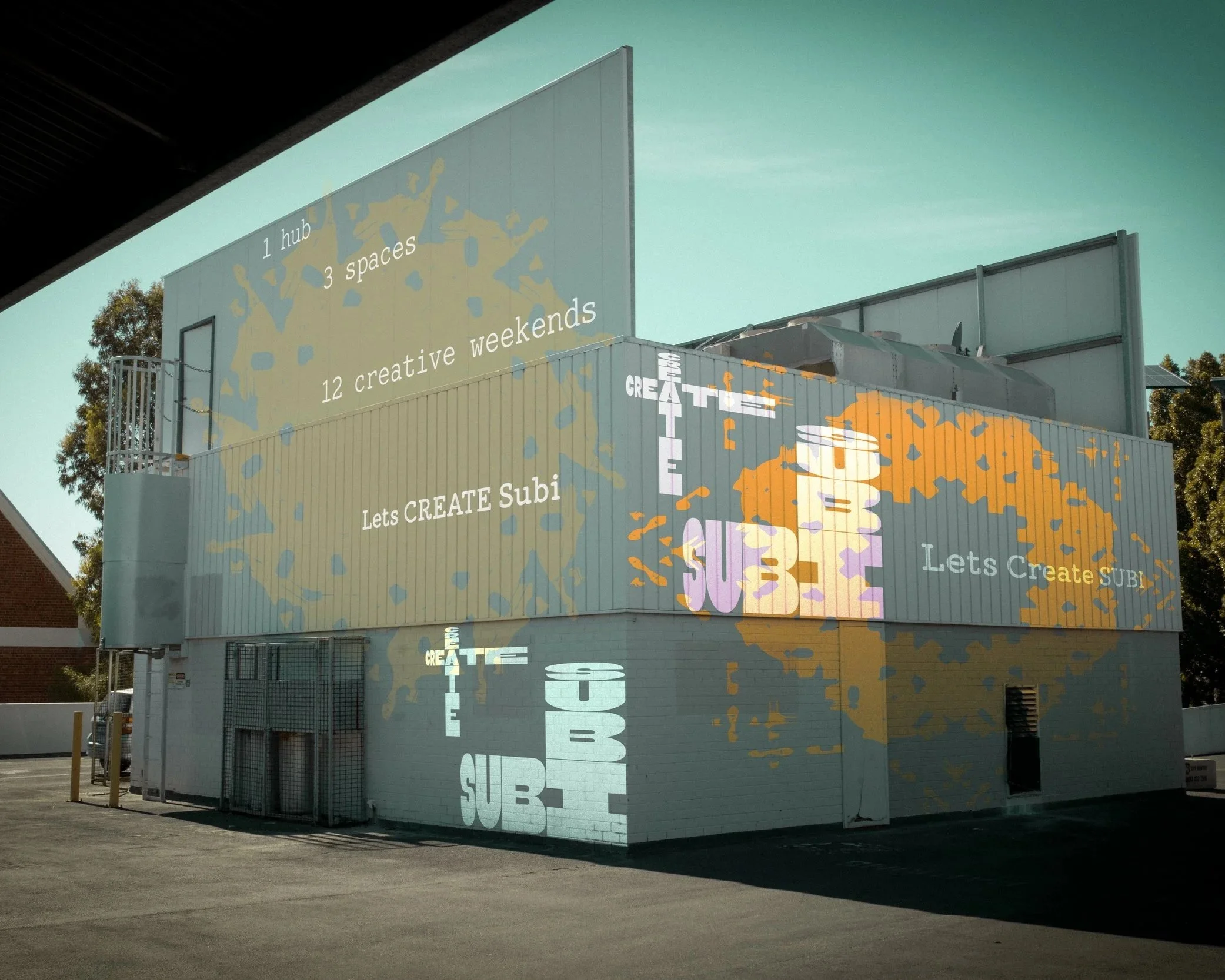
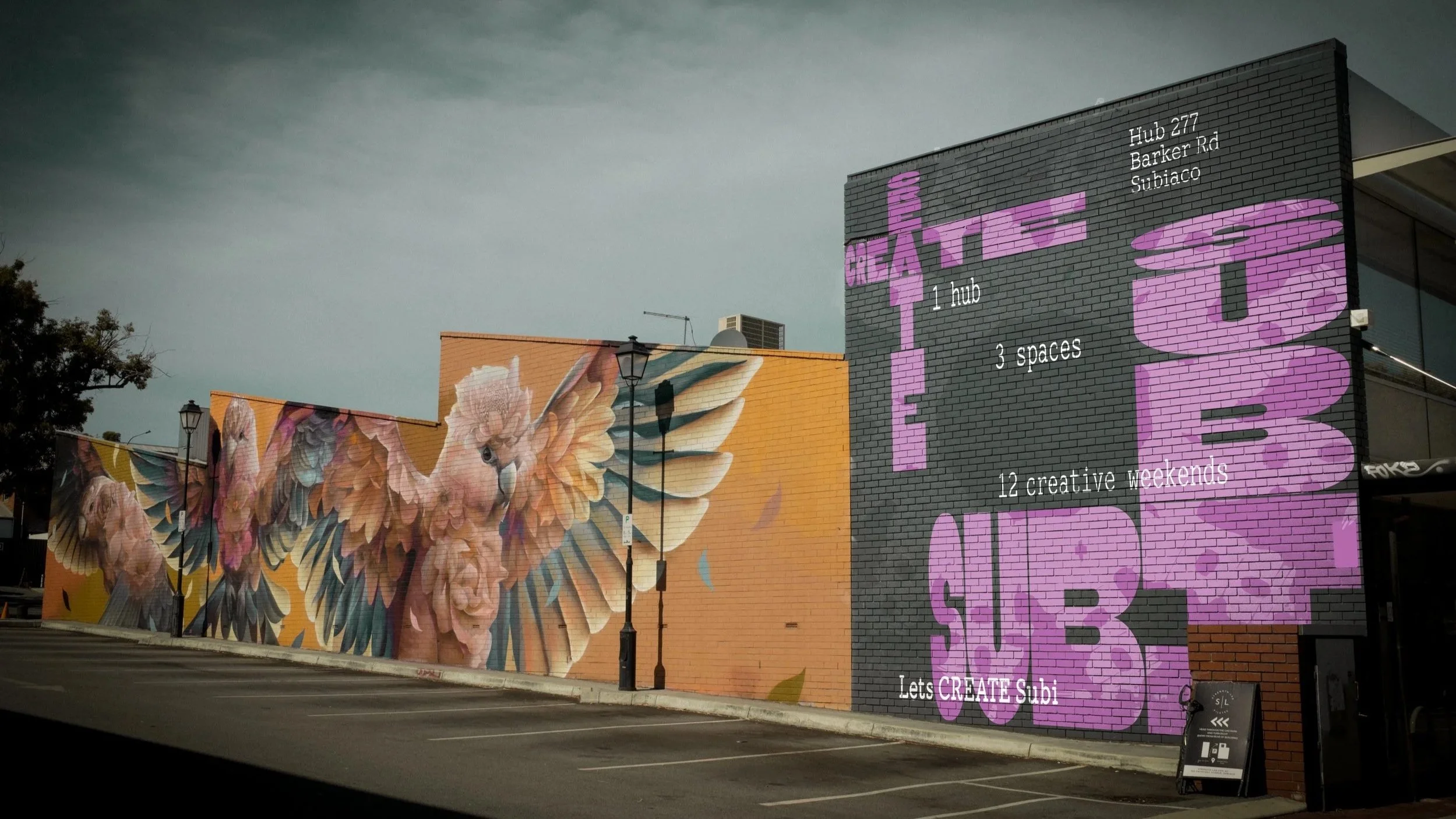
Three semi-permanent shipping containers will be installed
within the space.
Outside of events, they function
as open creative walls for public
art and murals.
During activations, they open to become compact venues for local musicians, exhibitions by local artists, pop-up cafés and bars, and workshops across a range of creative disciplines.
1 hub · 3 venues · 12 creative weekends
Design Principles
Designing a system,
not a style
The visual approach for CREATE SUBI is intentionally restrained.
The aim is not to compete with the creative output of the community,
but to provide a clear, flexible framework that can support it.
The campaign is designed as
a system, one that can hold a wide range of activity over time without losing coherence.
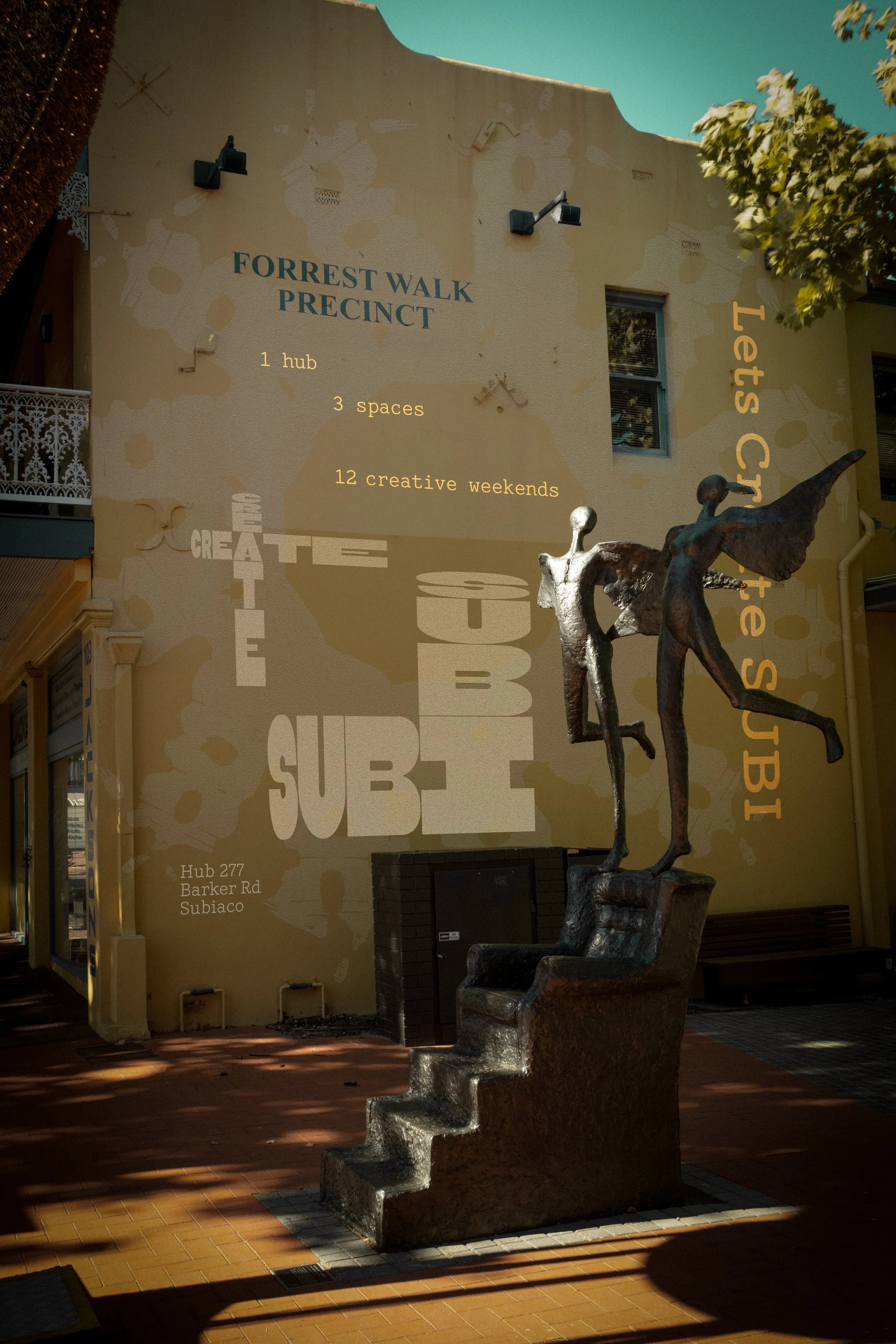
A typographic-first approach
The first year of CREATE SUBI
is conceived as a purely
typographic campaign.
This decision reflects the core idea
of the initiative: that the community and small businesses are the creators, not the campaign itself.
By avoiding illustrative or photographic imagery, the identity leaves space for participation rather than imposing a visual narrative
of its own.
Typography becomes the primary vehicle for communication: clear, direct, and adaptable across formats.
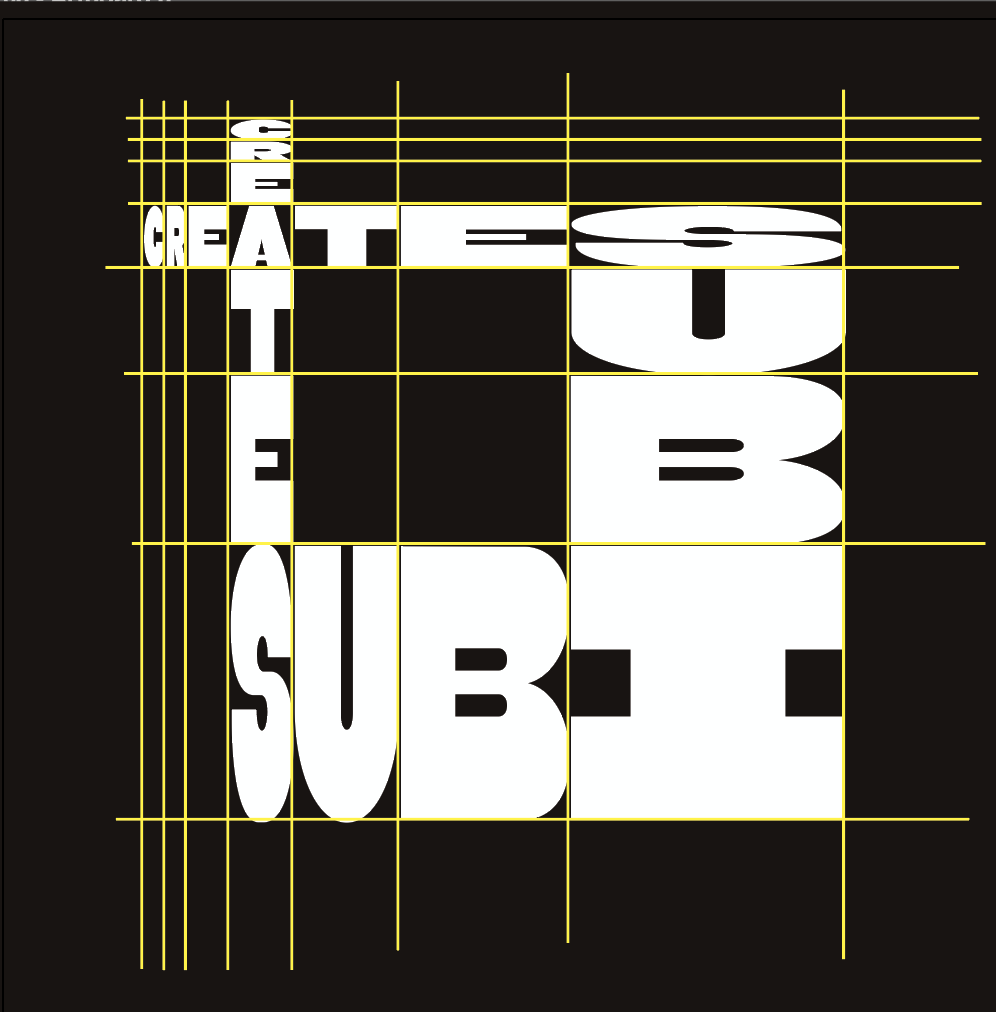
Structure through
the Fibonacci sequence
To ensure consistency without rigidity, the Fibonacci sequence was used to define a workable grid system for the wordmark and promotional materials.
This provided:
A repeatable underlying structure
Visual rhythm and balance
Flexibility across different
scales and applications
The grid helped maintain coherence while allowing content to change, supporting the initiative’s evolving nature over a 12-month period.
GRAPHIC ELEMENTS
& Posters
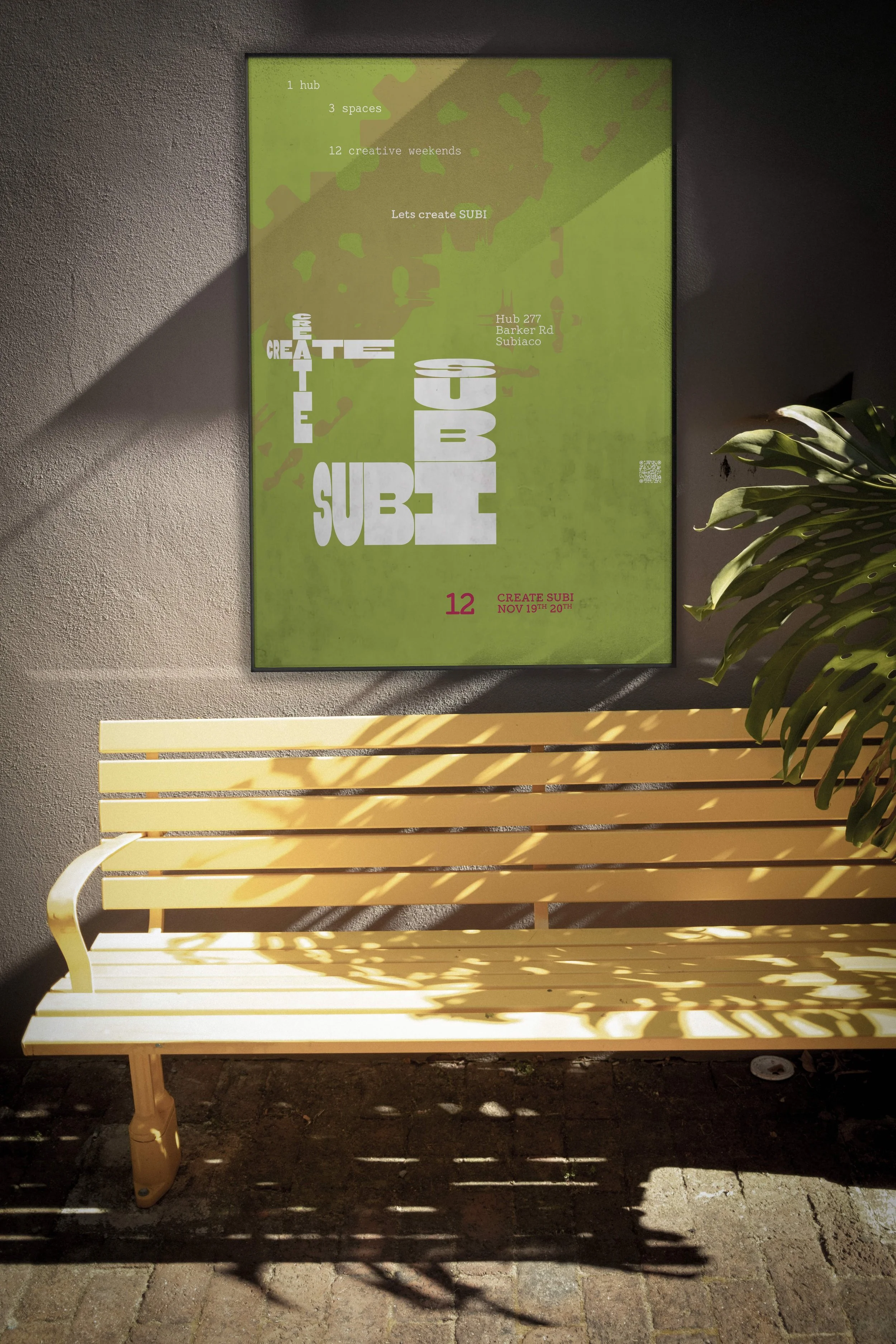
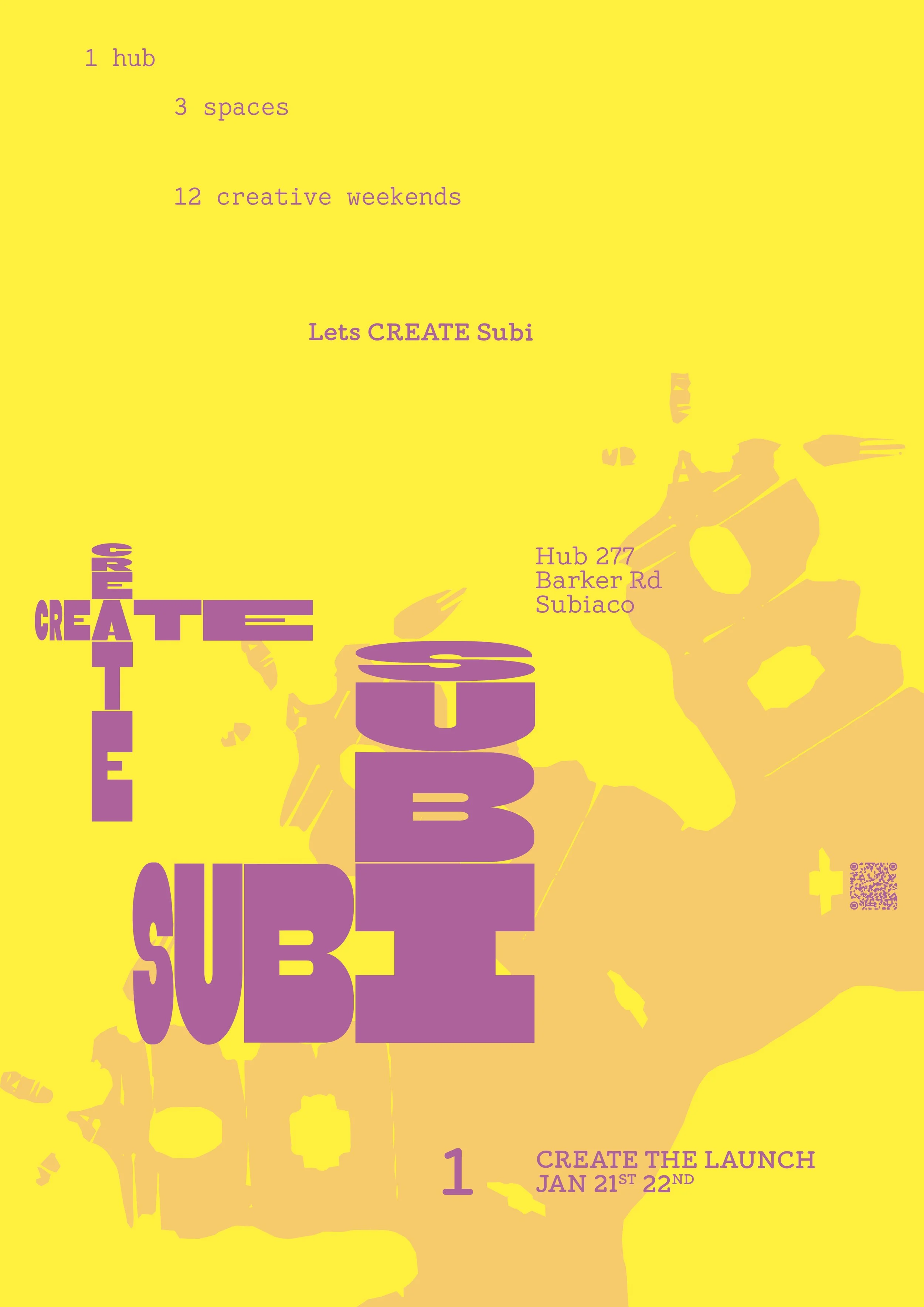
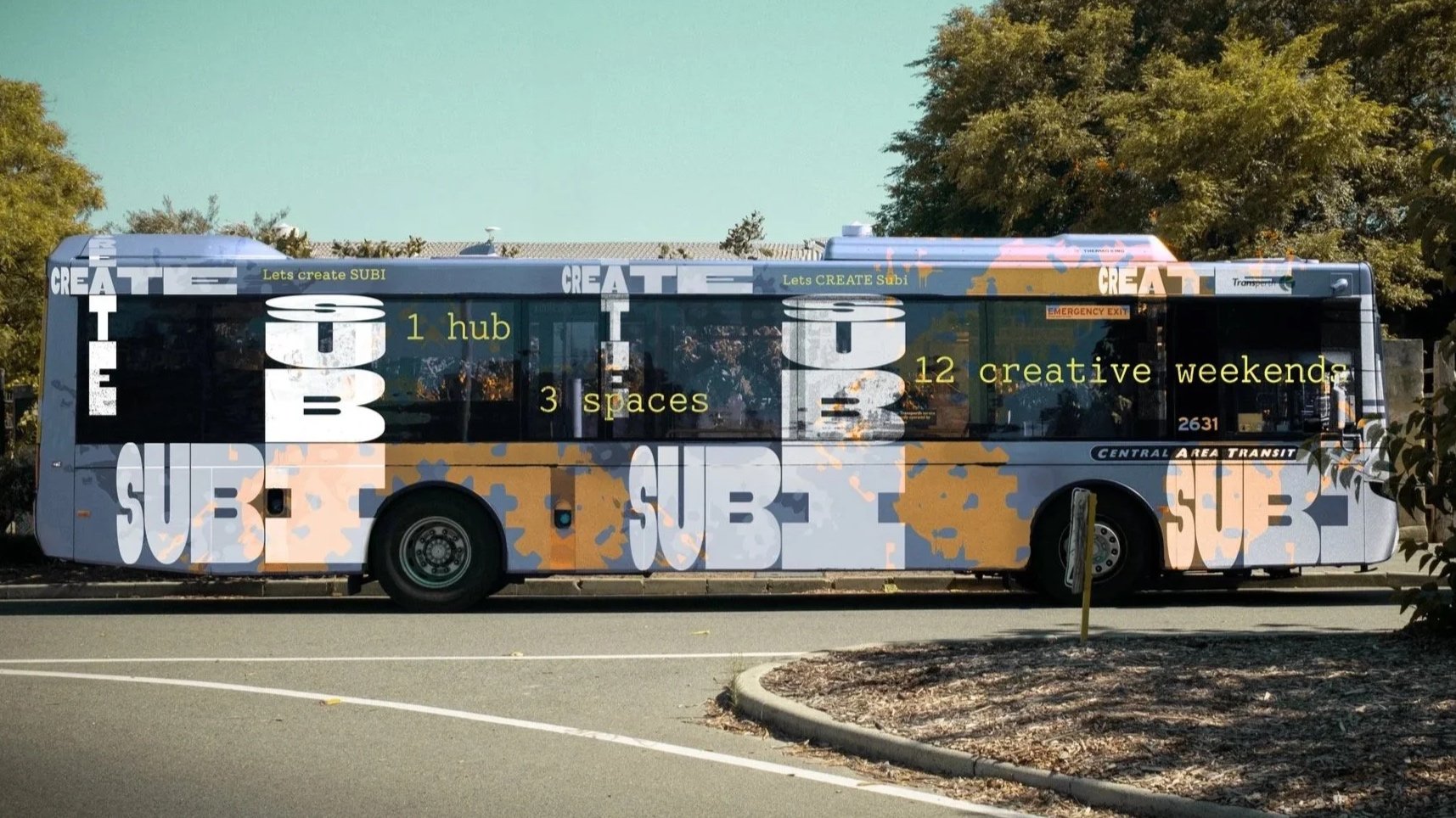
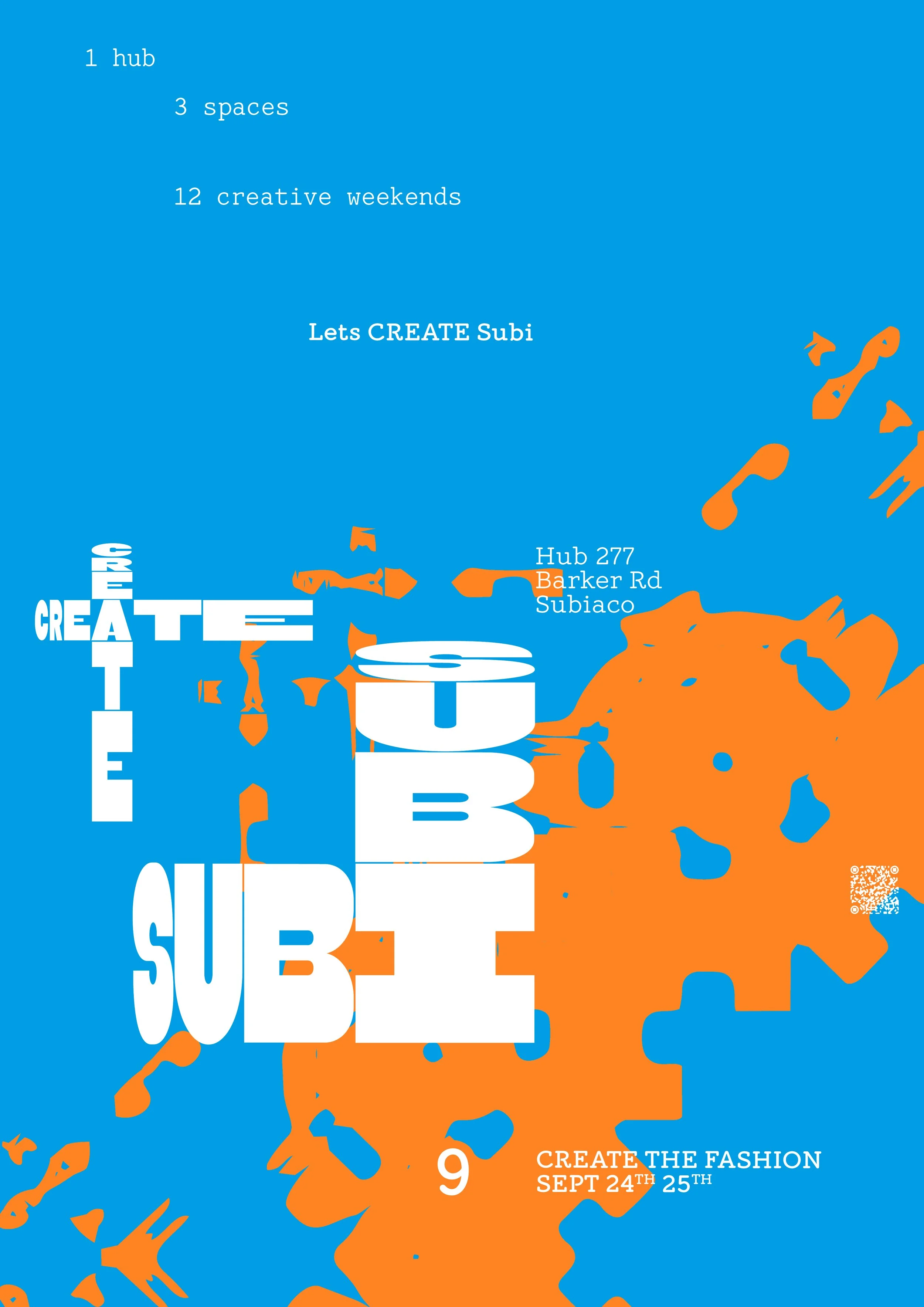
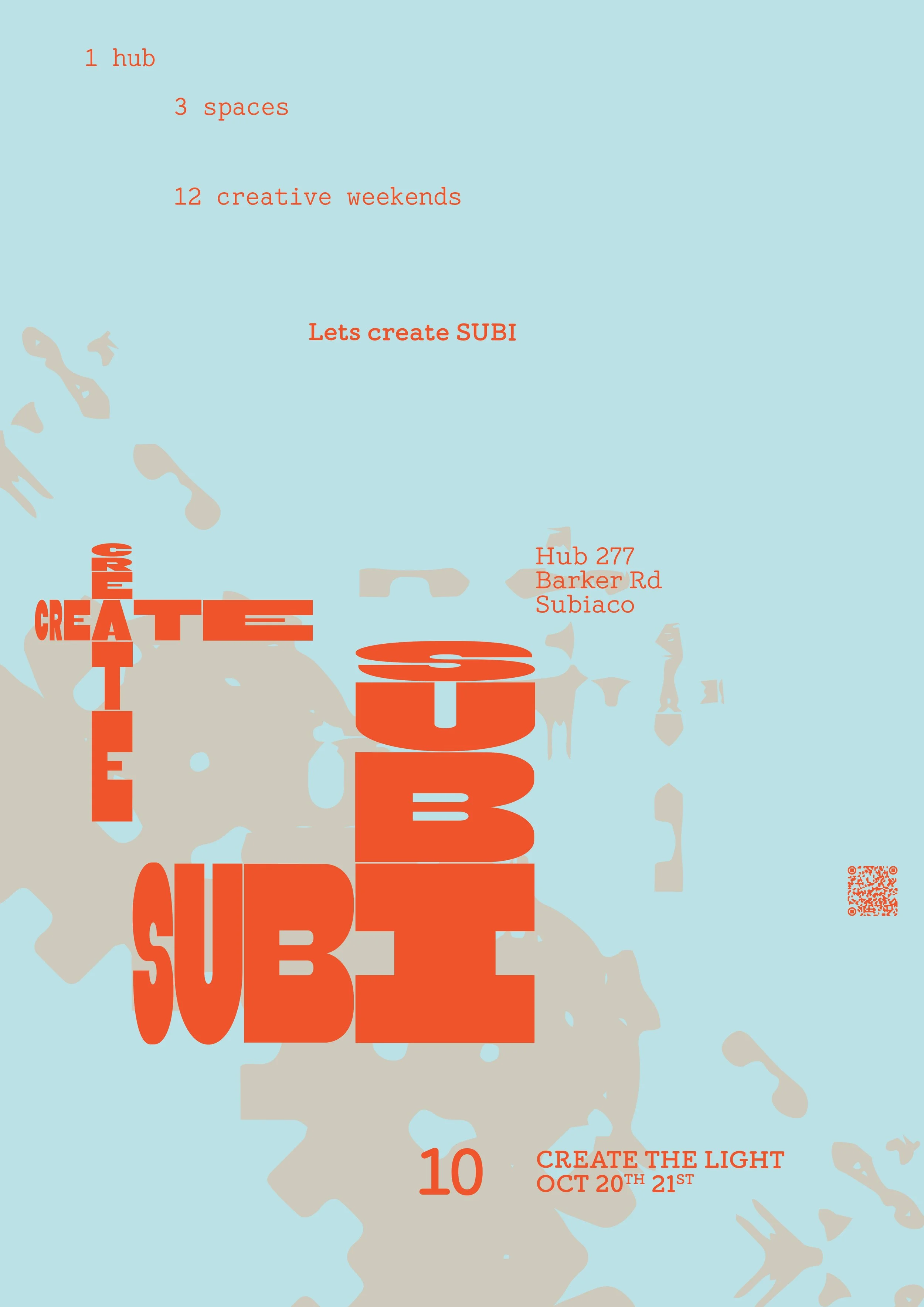
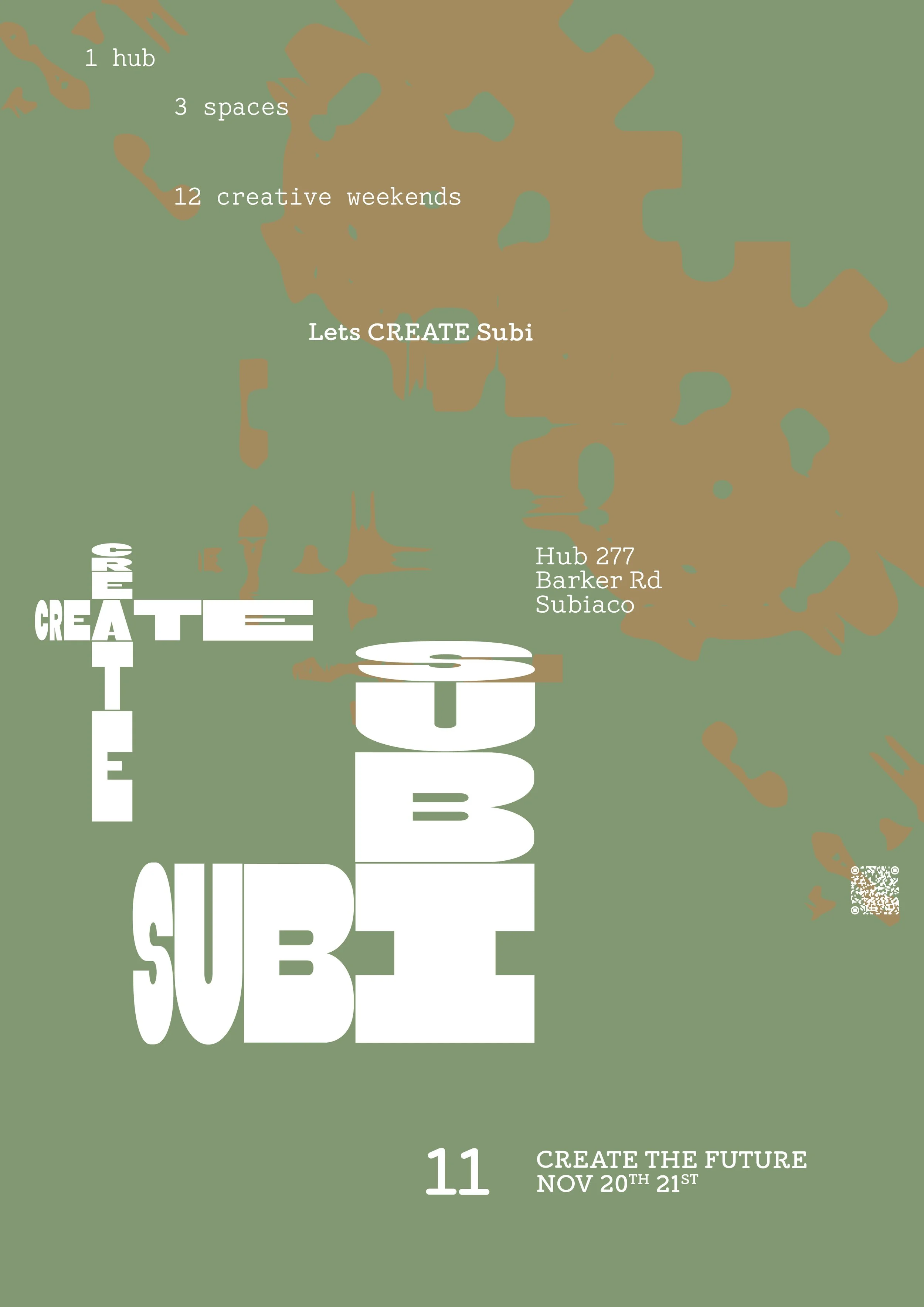
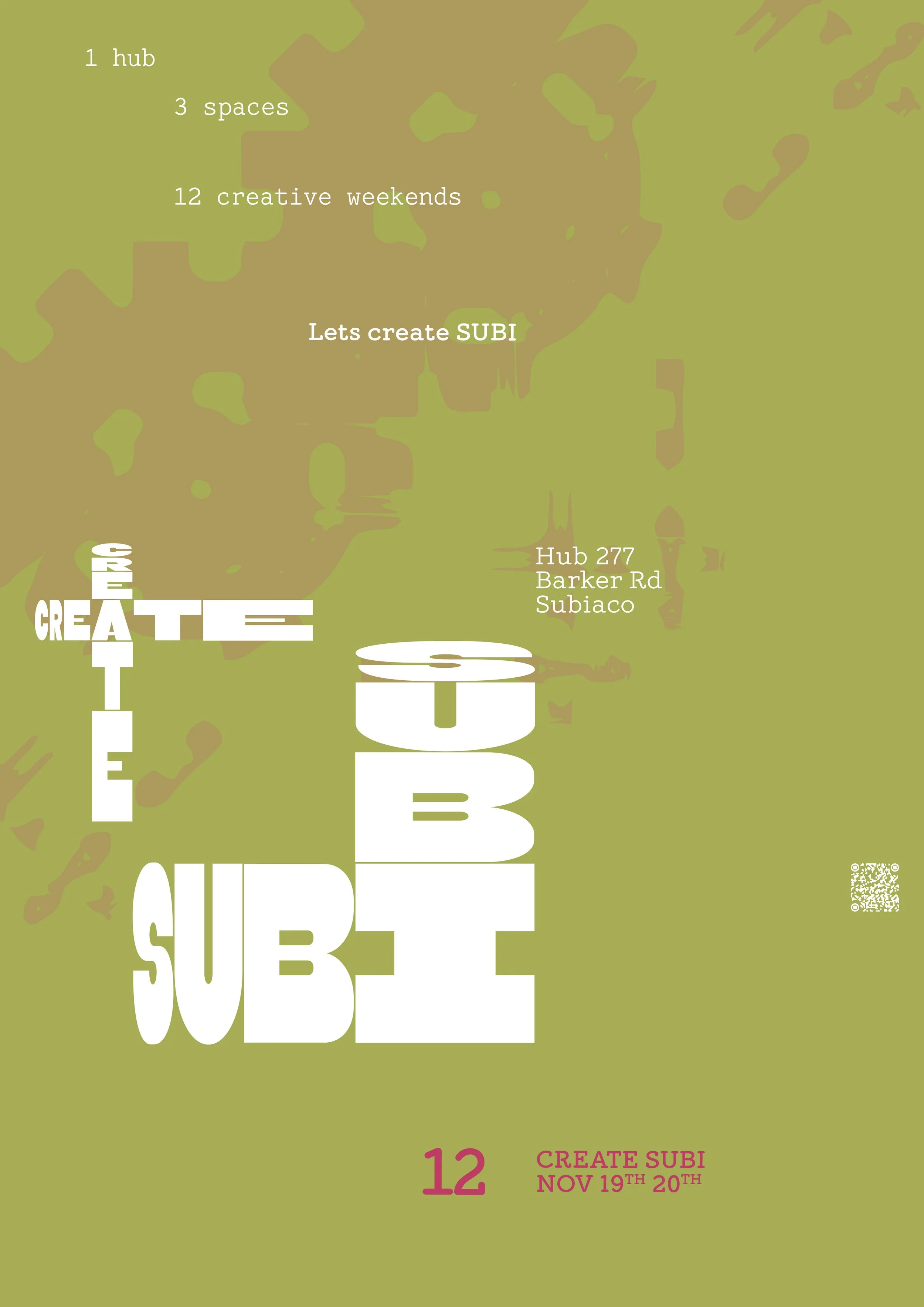
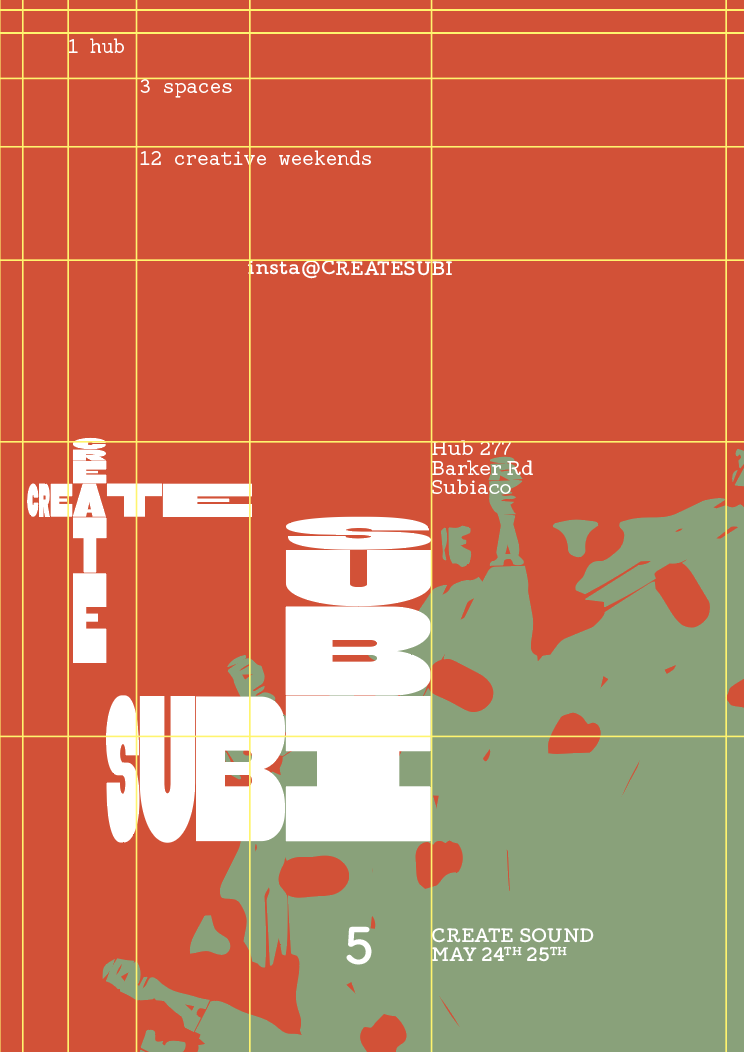
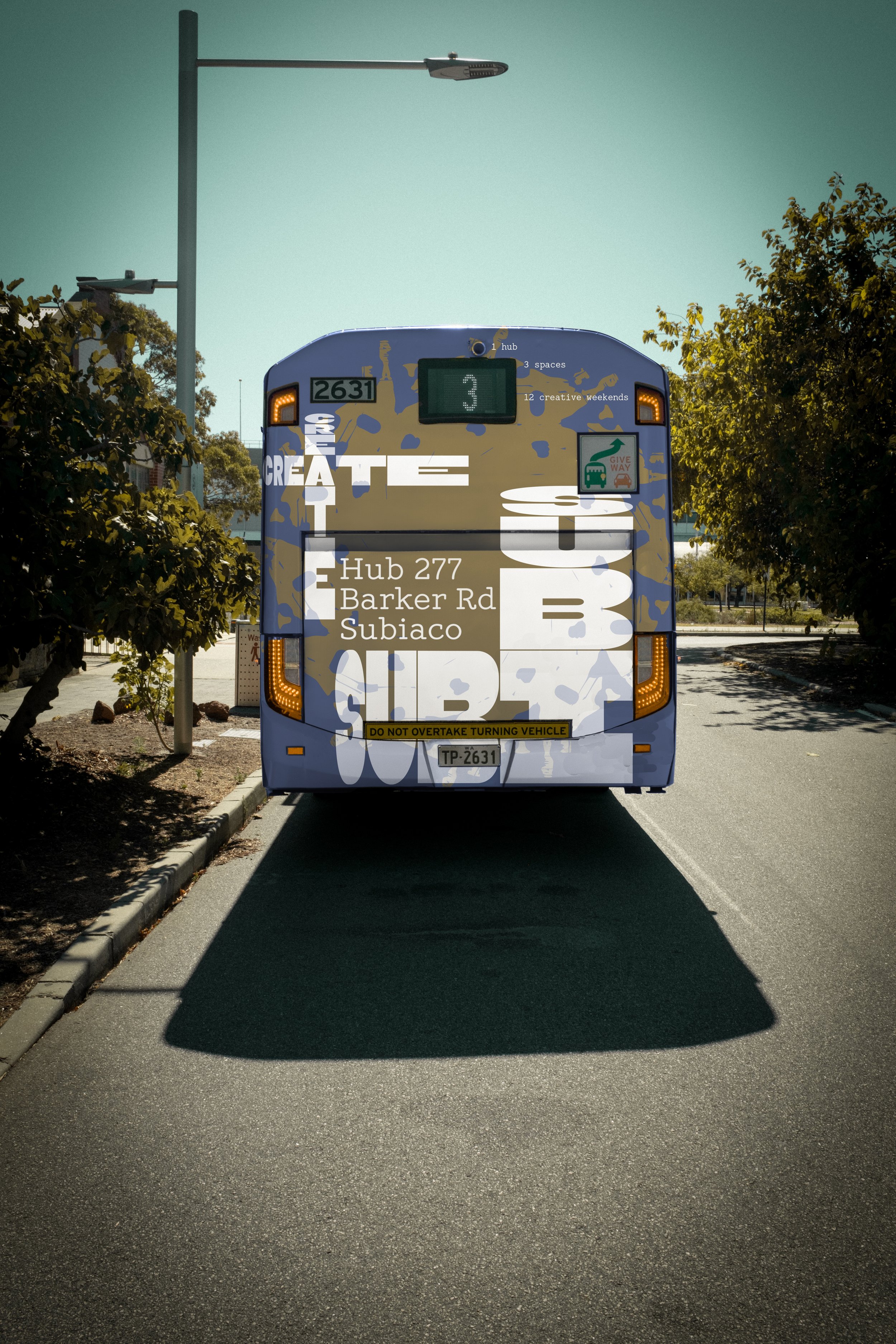
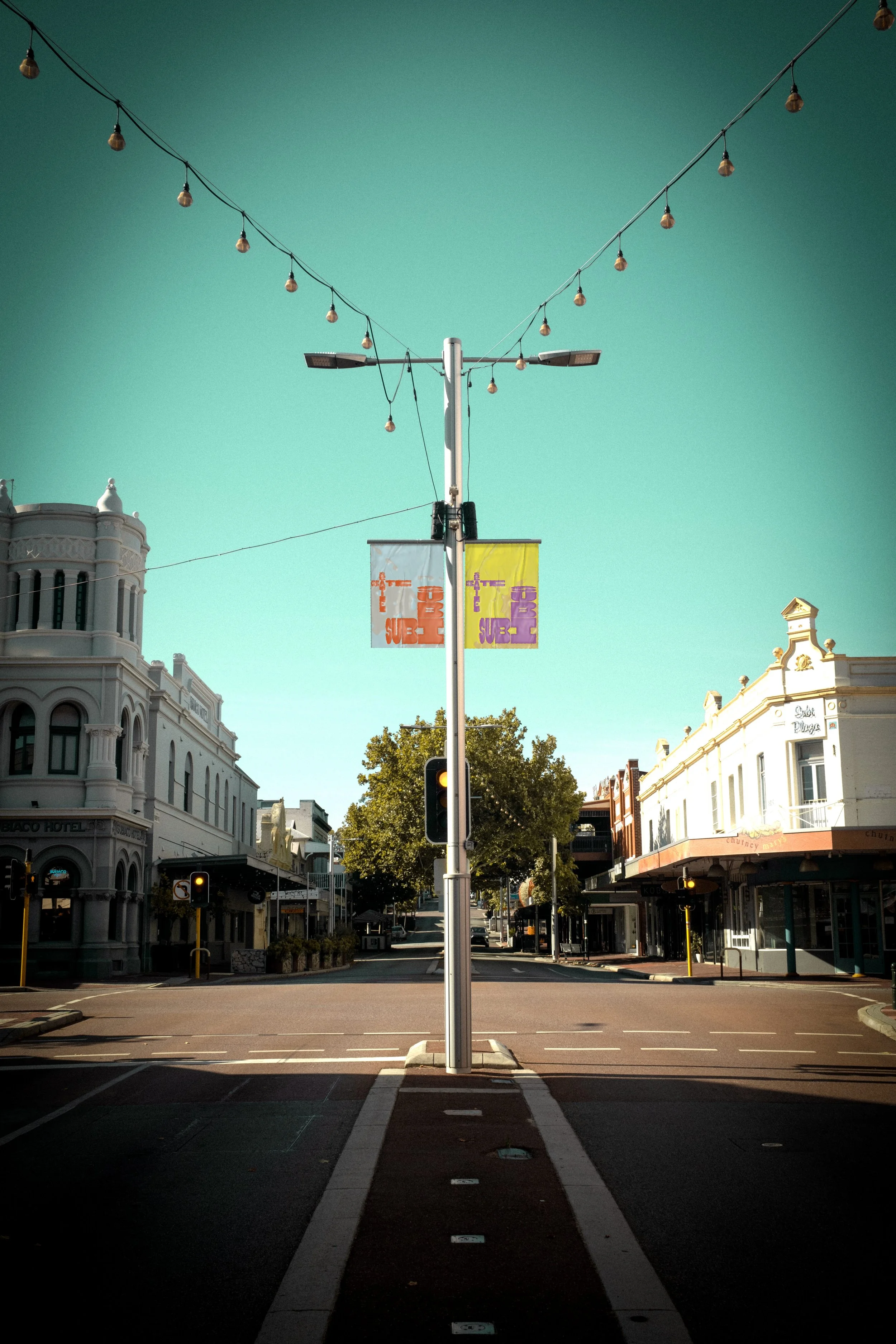
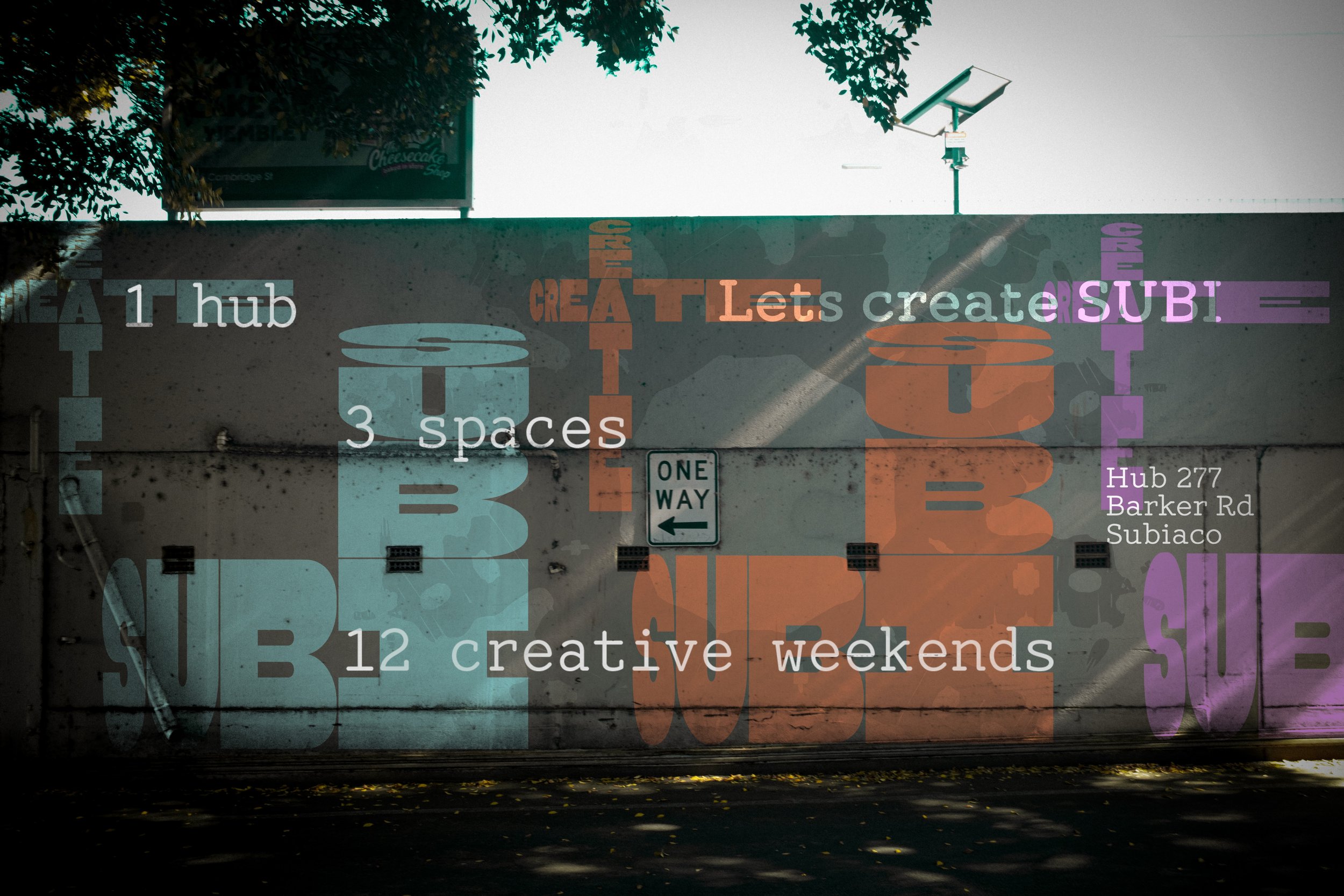
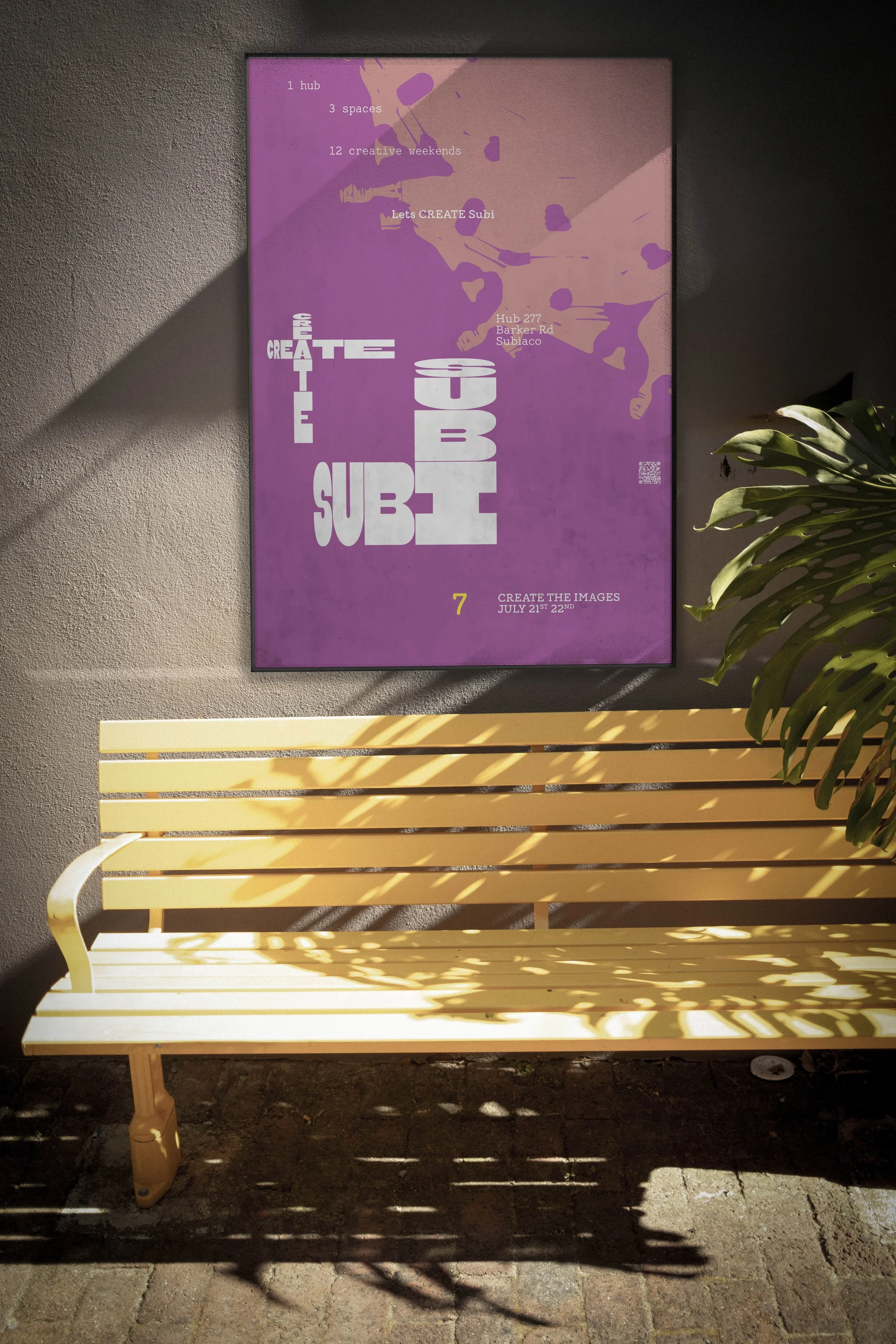
Strong graphic elements for CREATE SUBI are built from the wordmark itself, which is repeated and rotated to form a series of radial patterns.
Using the project name as the primary graphic material allows the identity to evolve through use, rather than
rely on illustrative imagery.
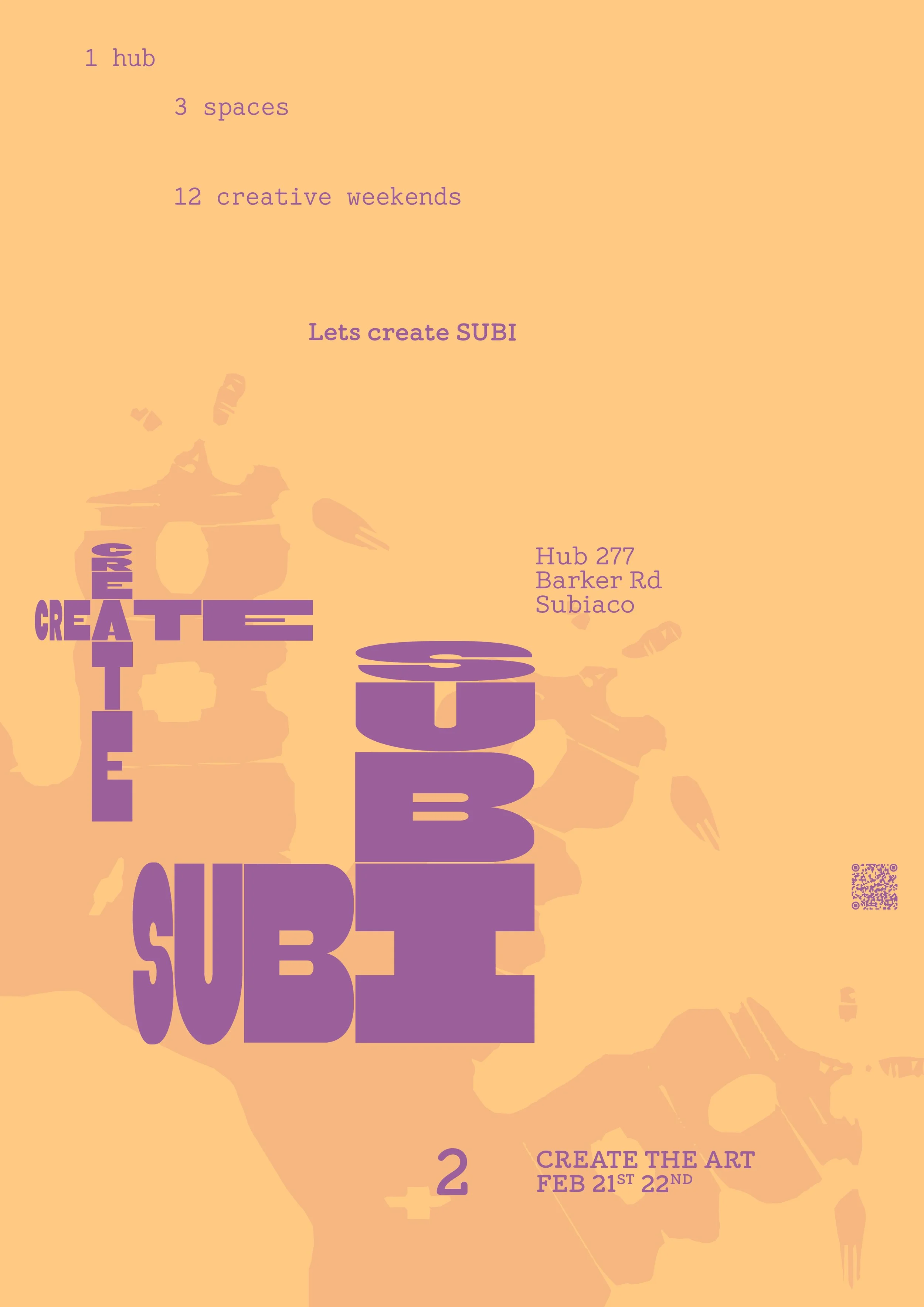
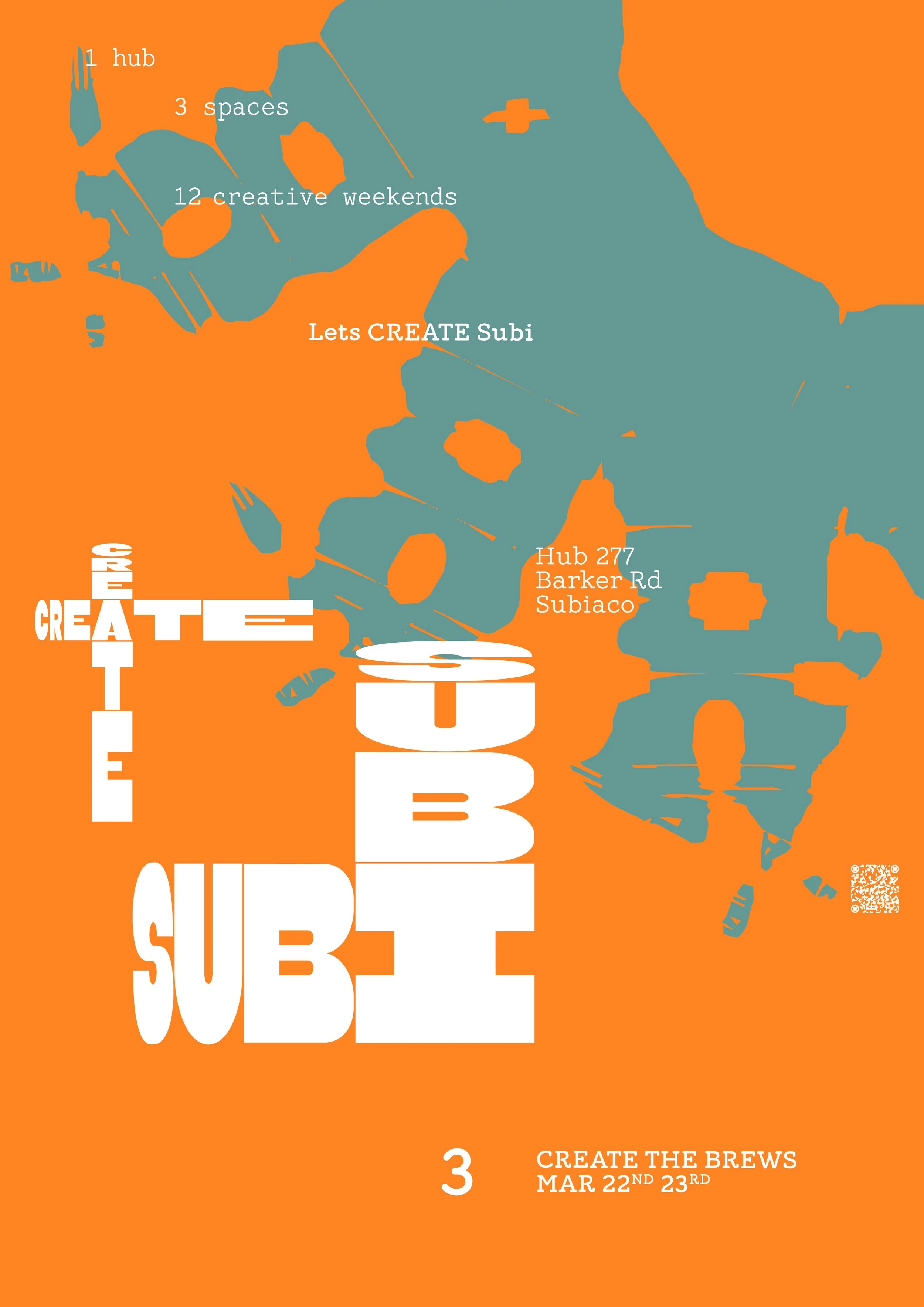
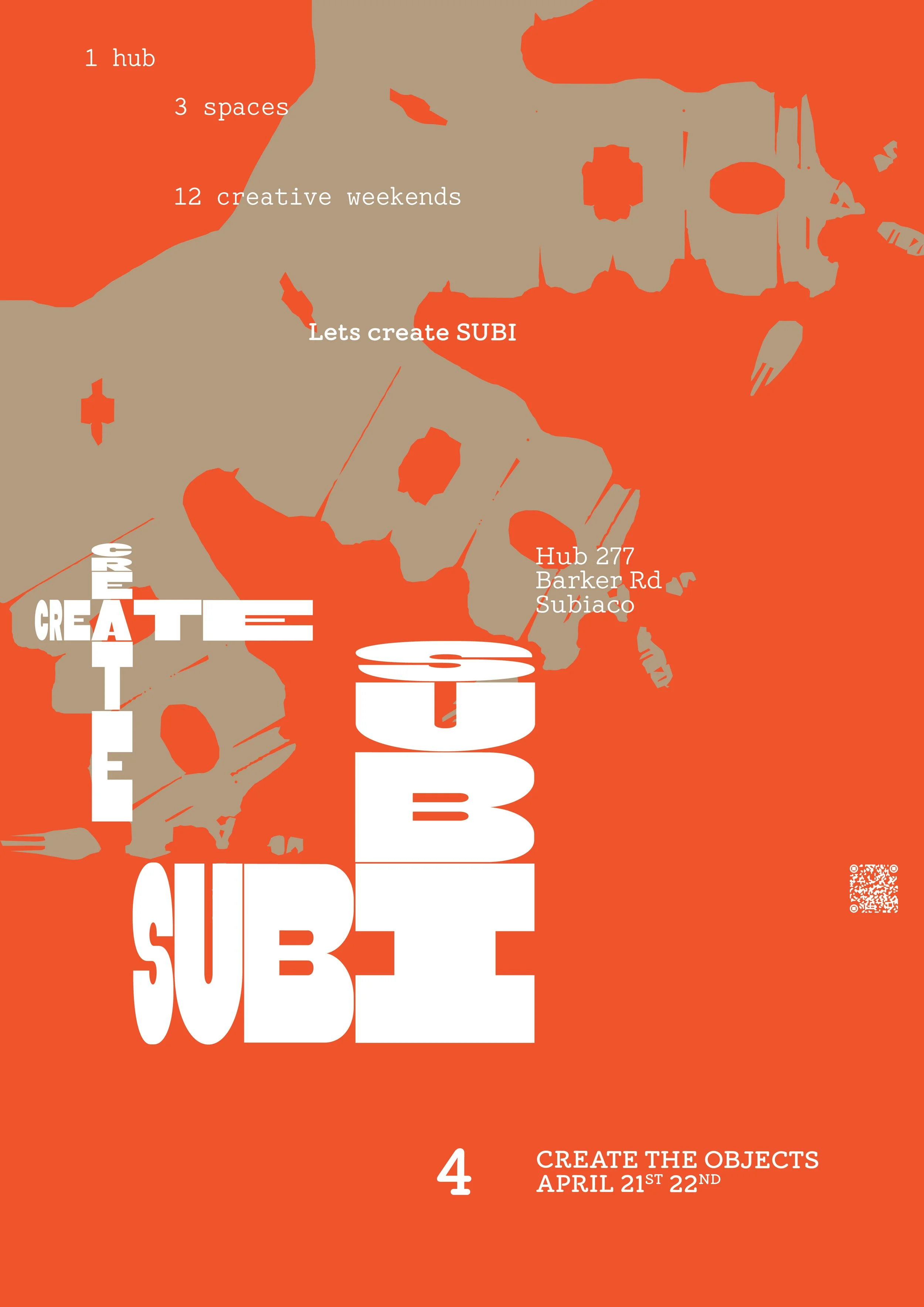
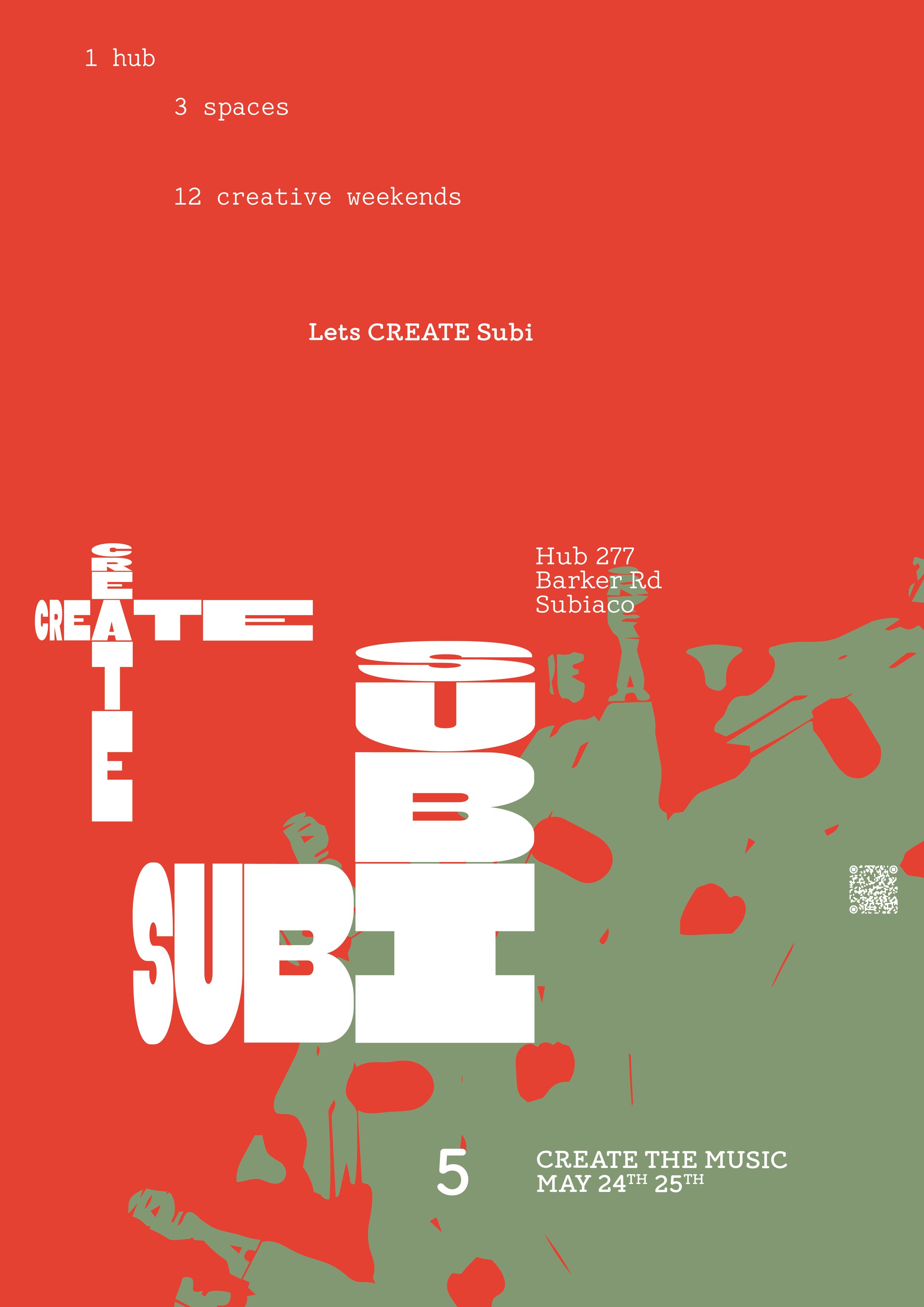
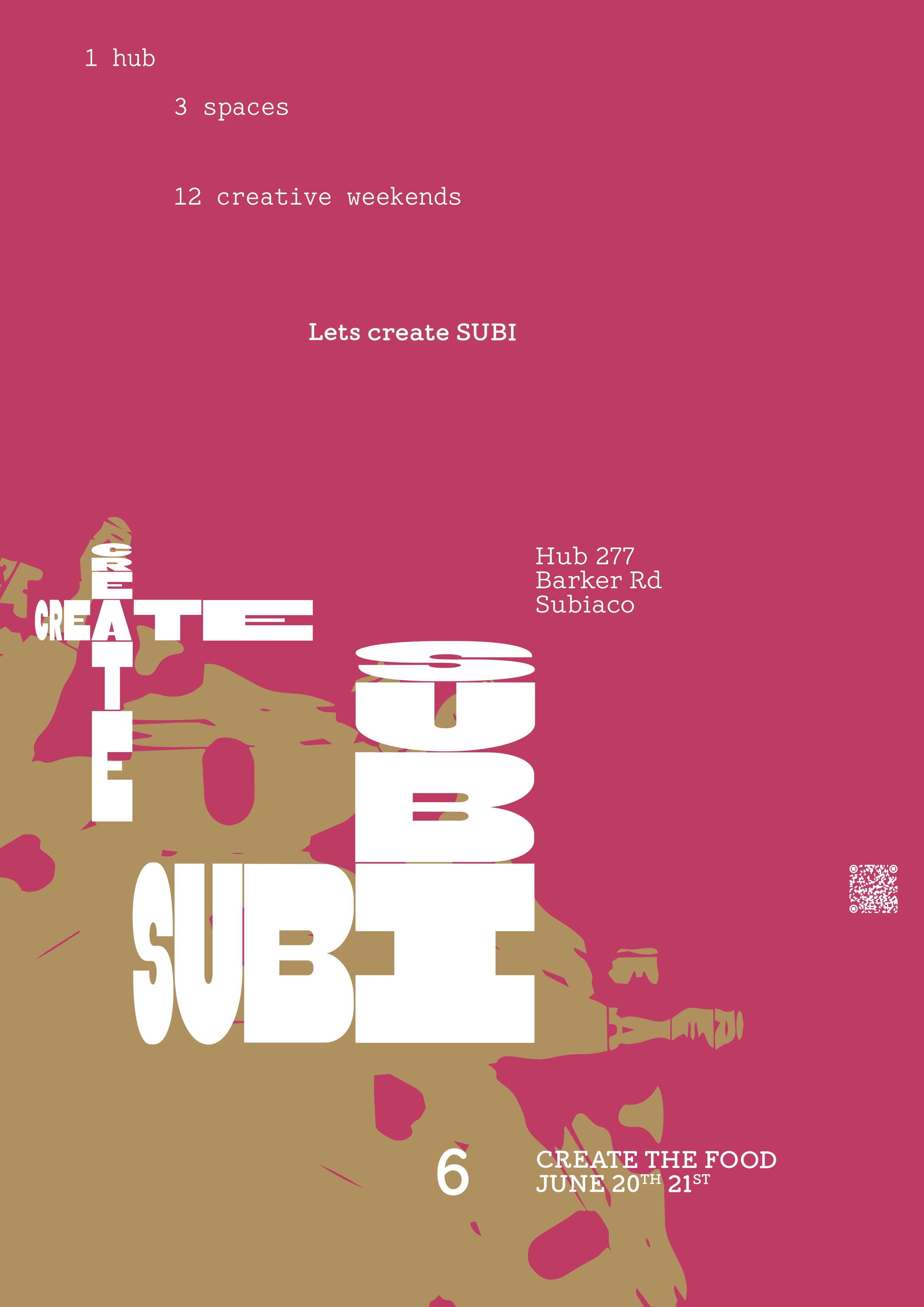
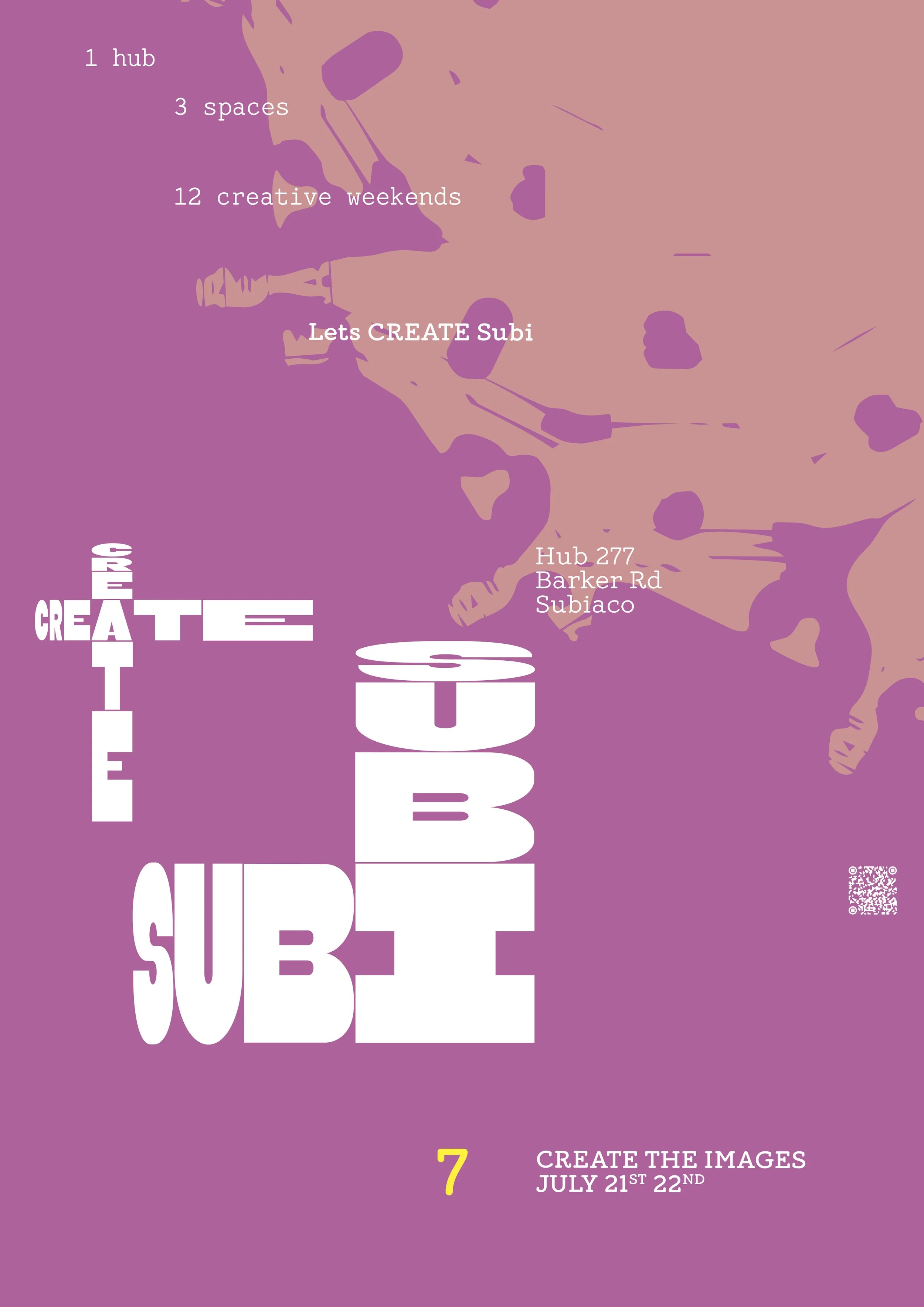
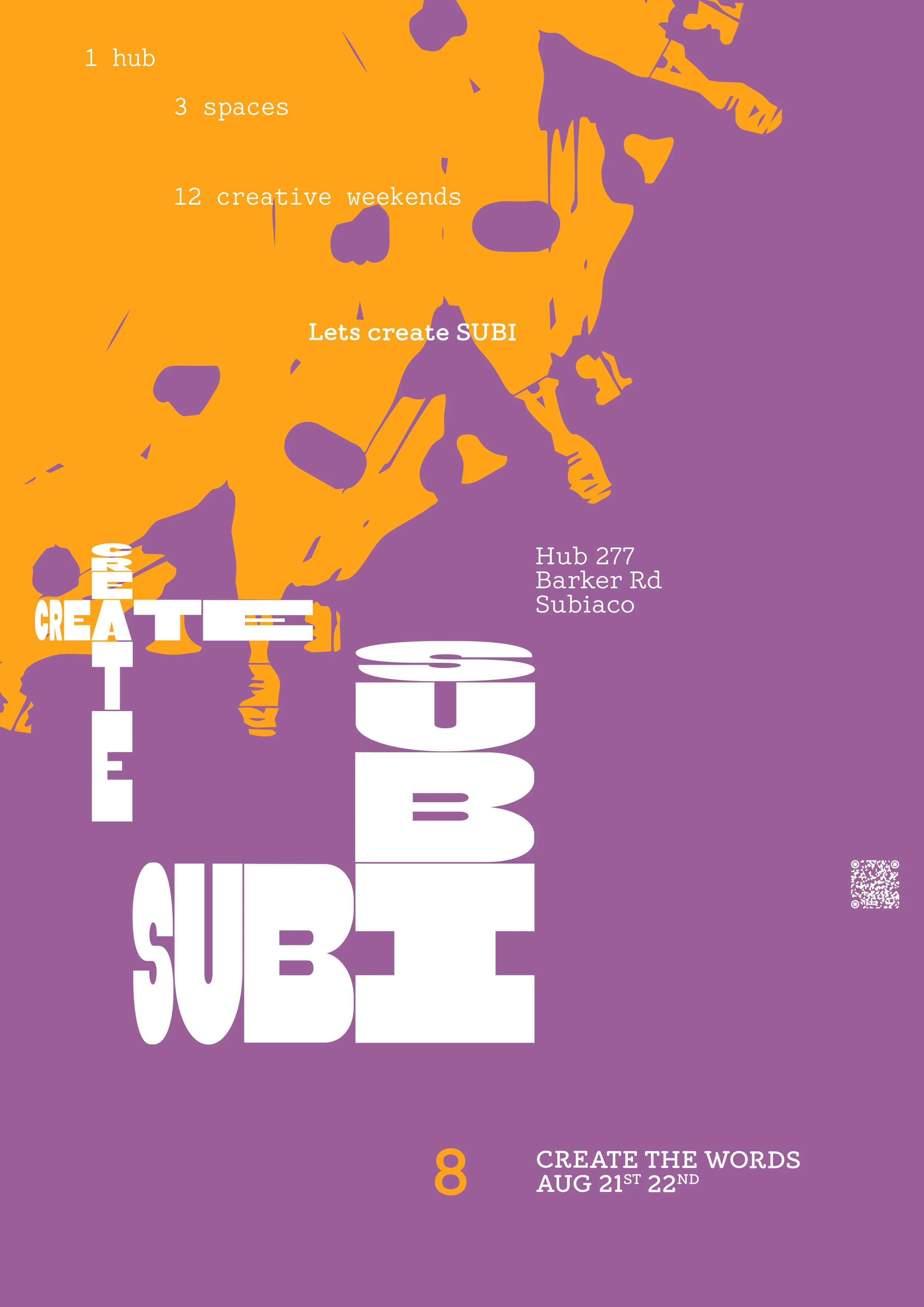
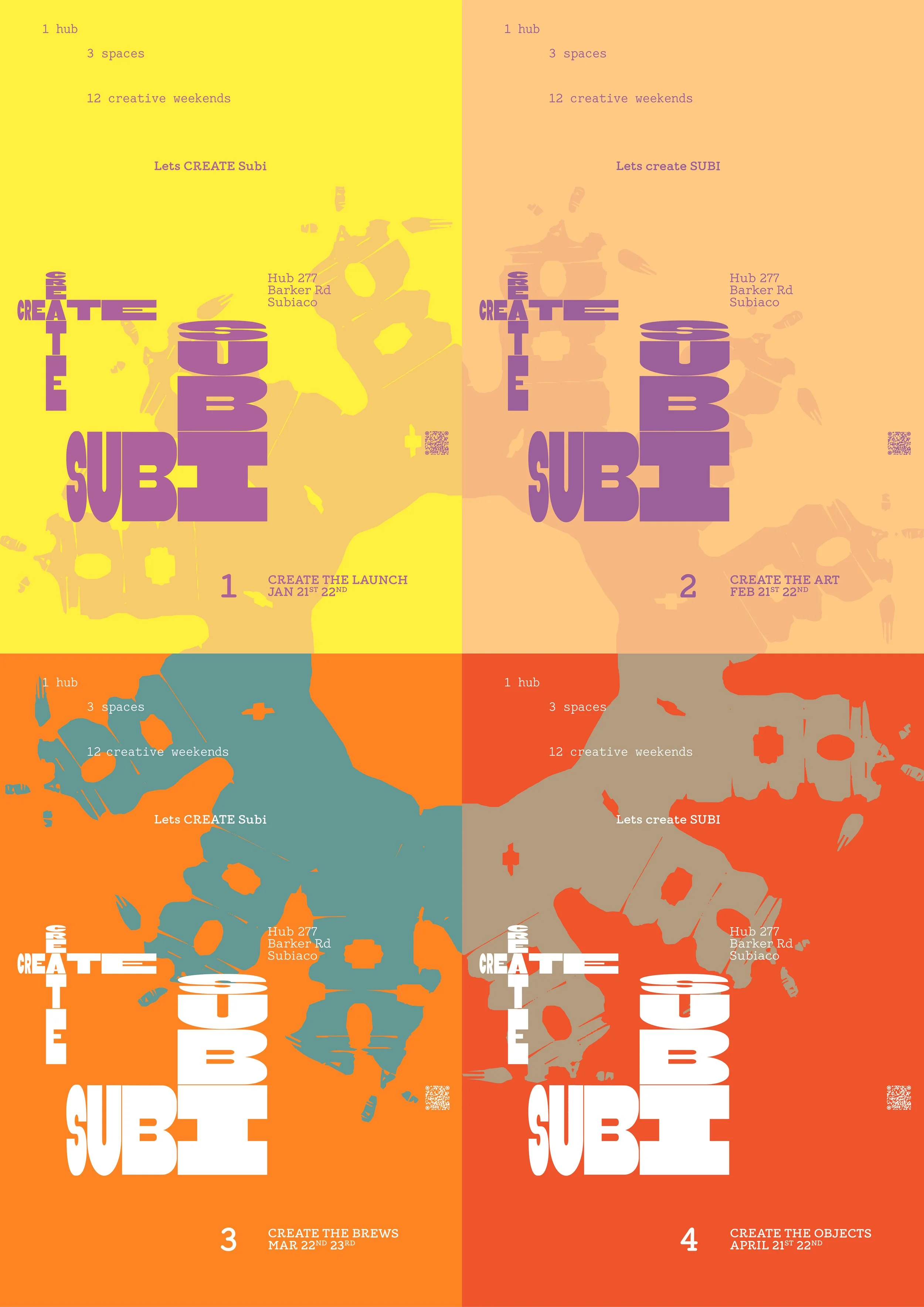
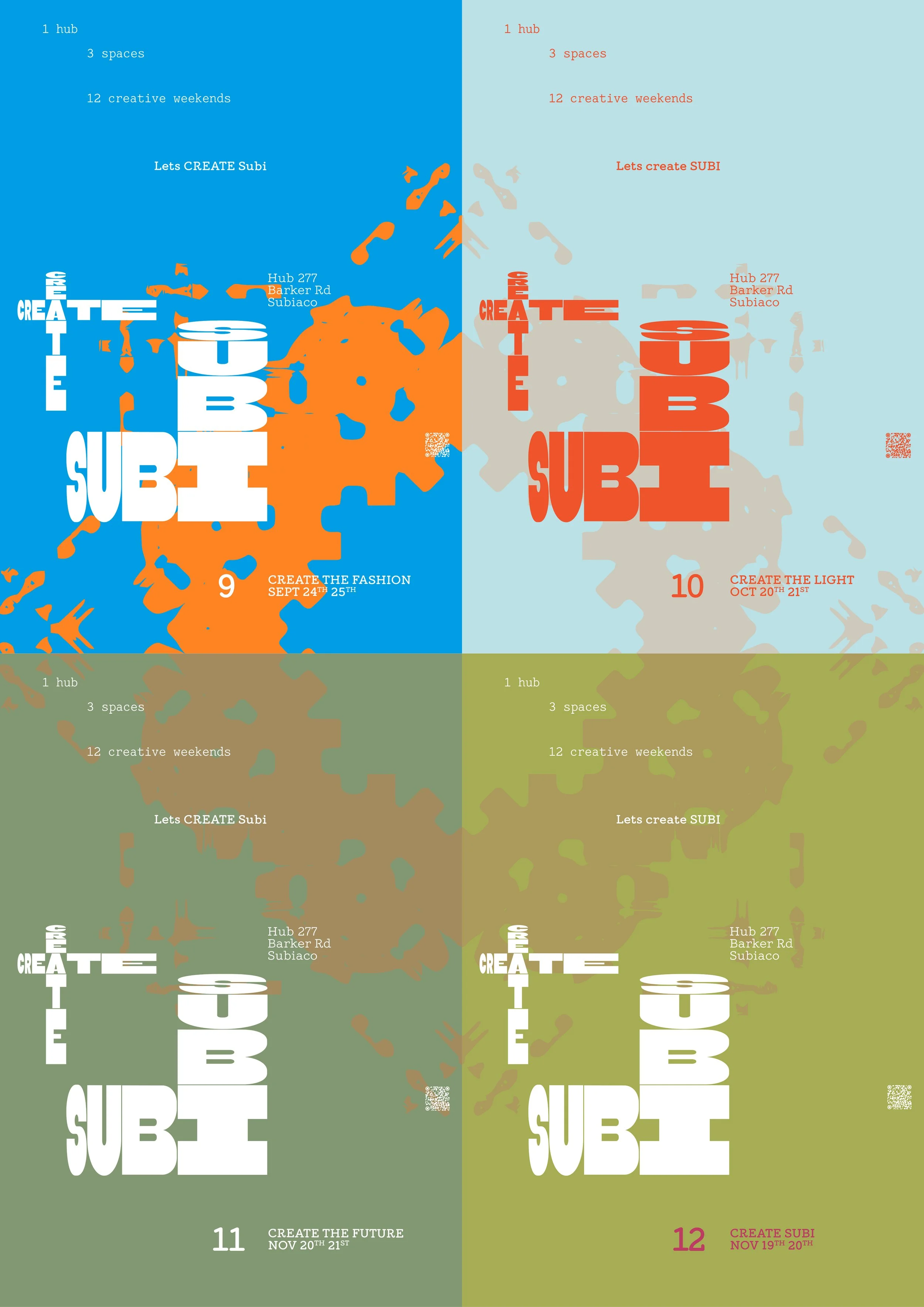
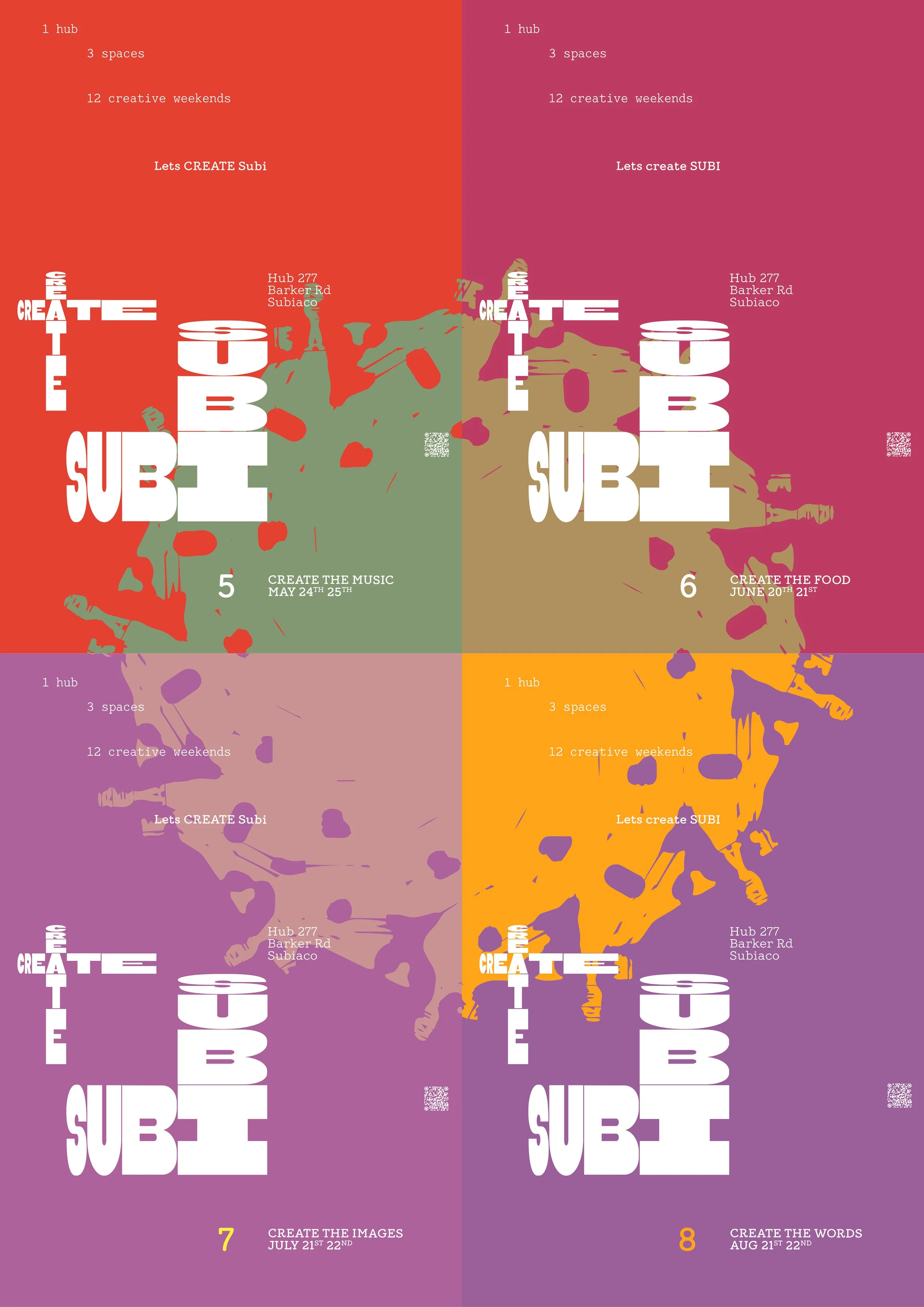
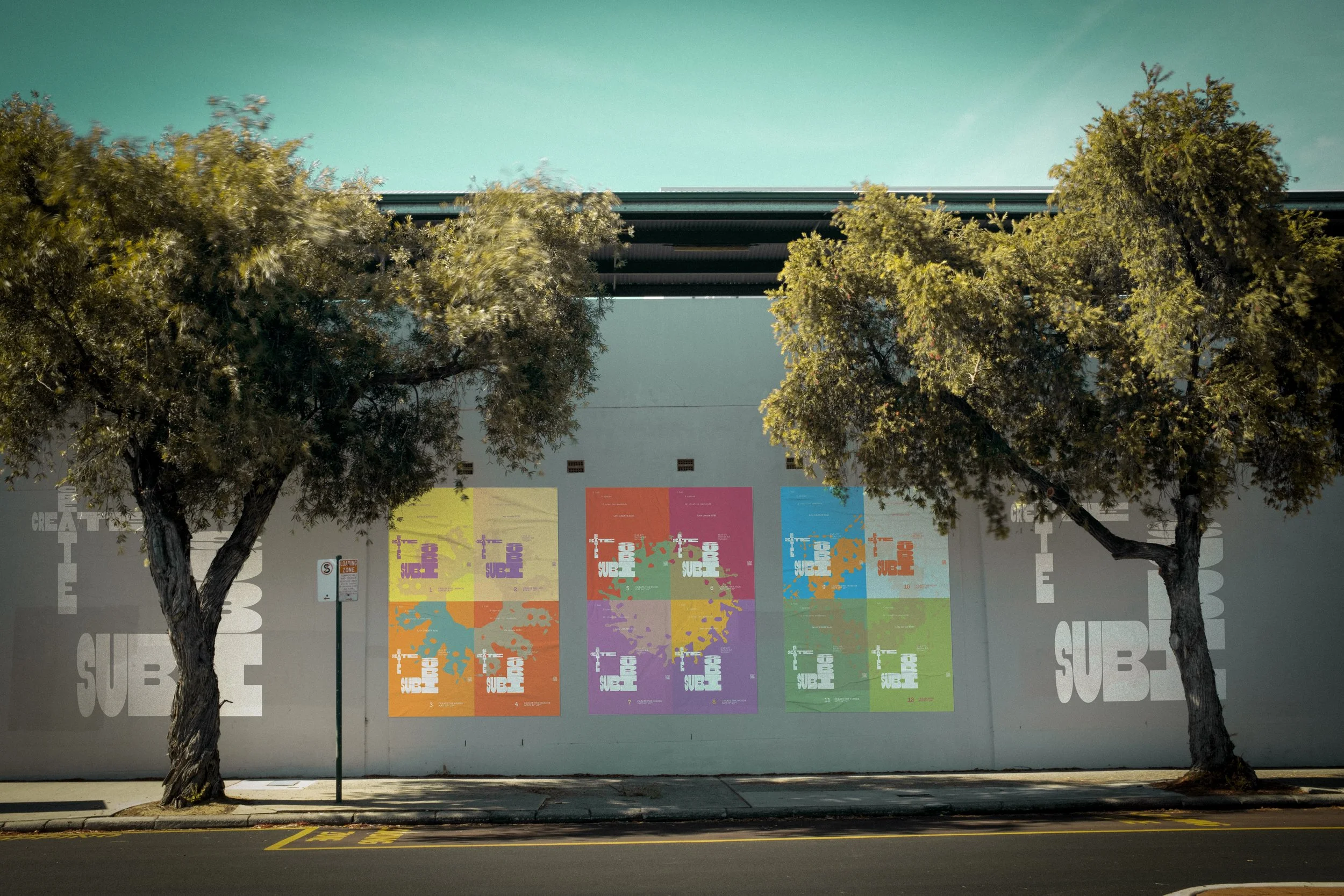
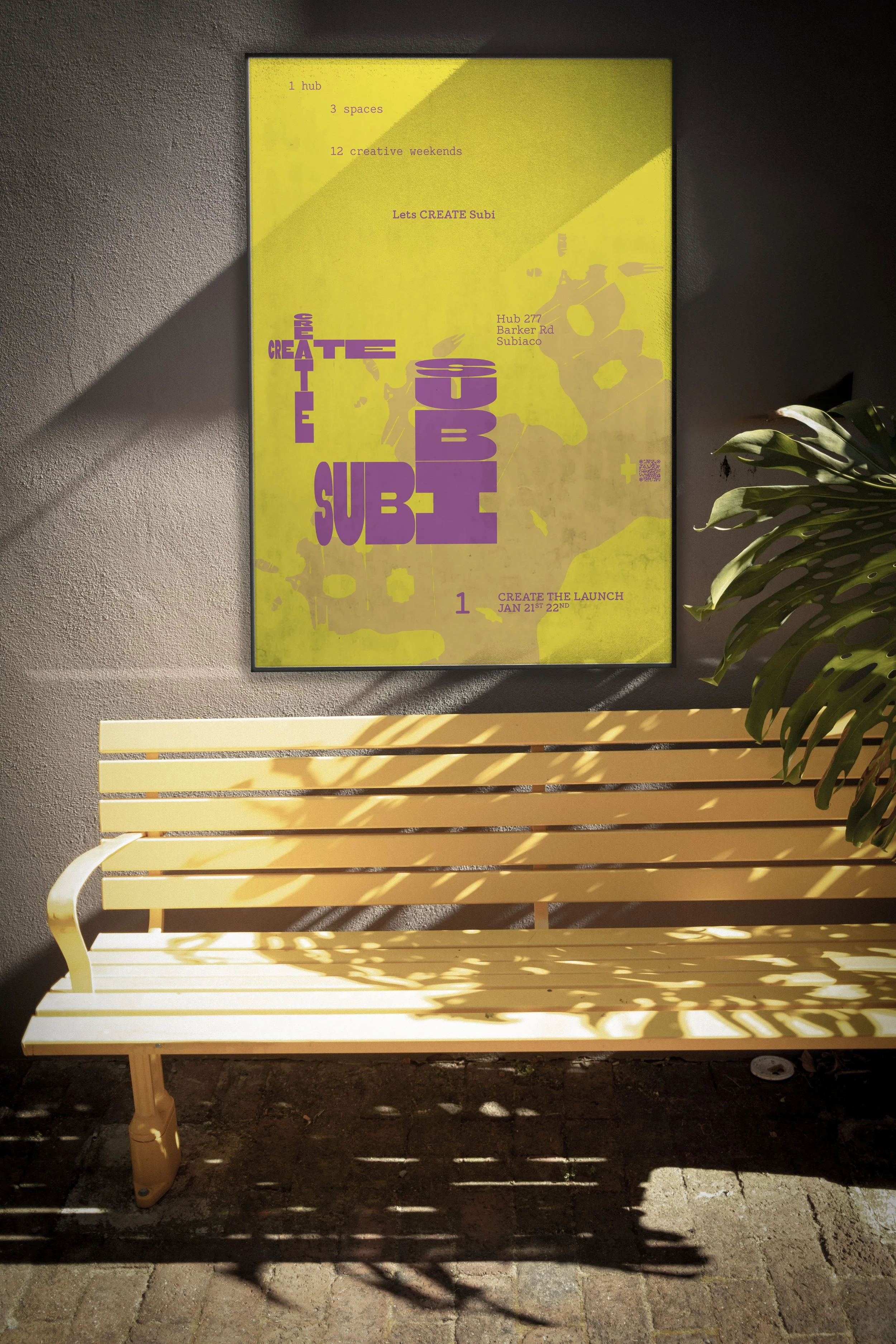
A series of twelve posters have been developed to align with the twelve monthly activations. Each poster
uses a reduced, complementary colour palette to ensure clarity and consistency across the program.
The posters are designed to function individually or as grouped installations, where overlapping elements combine into a single form.
This approach supports the broader goal of CREATE SUBI: establishing
a cohesive and recognisable creative identity for Subiaco over time.
Designing
for evolution
The system was designed with
longevity in mind.
Year one focuses on establishing clarity and participation. If the initiative progresses into a second year, the framework allows for photography and documentation of the first year’s events and creations to be introduced naturally into the design materials.
This means the identity can evolve from inviting participation to celebrating outcomes, without needing to be redesigned from scratch.
Principle-led,
not aesthetic-led
Every design decision was made
in service of the concept:
Clarity over decoration
Structure over spectacle
Participation over authorship
The result is an identity that supports the initiative’s purpose rather than overshadowing it.
the outcome
The CREATE SUBI initiative gives
the City Of Subiaco a clear platform
to support creative activity over a twelve-month period.
The identity and system helps the program feel intentional and stabilised, supporting promotion, participation, and internal alignment, while leaving space for the work of the community to take centre stage.
looking forward
The first year of CREATE SUBI is intentionally typographic, allowing participation to define the initiatives character.
If extended into a second year, the system allows for photography and documentation of the community’s output to be introduced, shifting the focus from invitation to celebration without requiring a redesign.
closing reflection
When cultural initiatives succeed,
it’s usually because the idea is clear enough for people to see themselves
in it.